01
1868
A Stop on the Iron Road
Ogallala is platted as a watering stop along the newly built Union Pacific Railroad. Named after the Oglala Sioux, the town begins as a cluster of section houses on the South Platte.
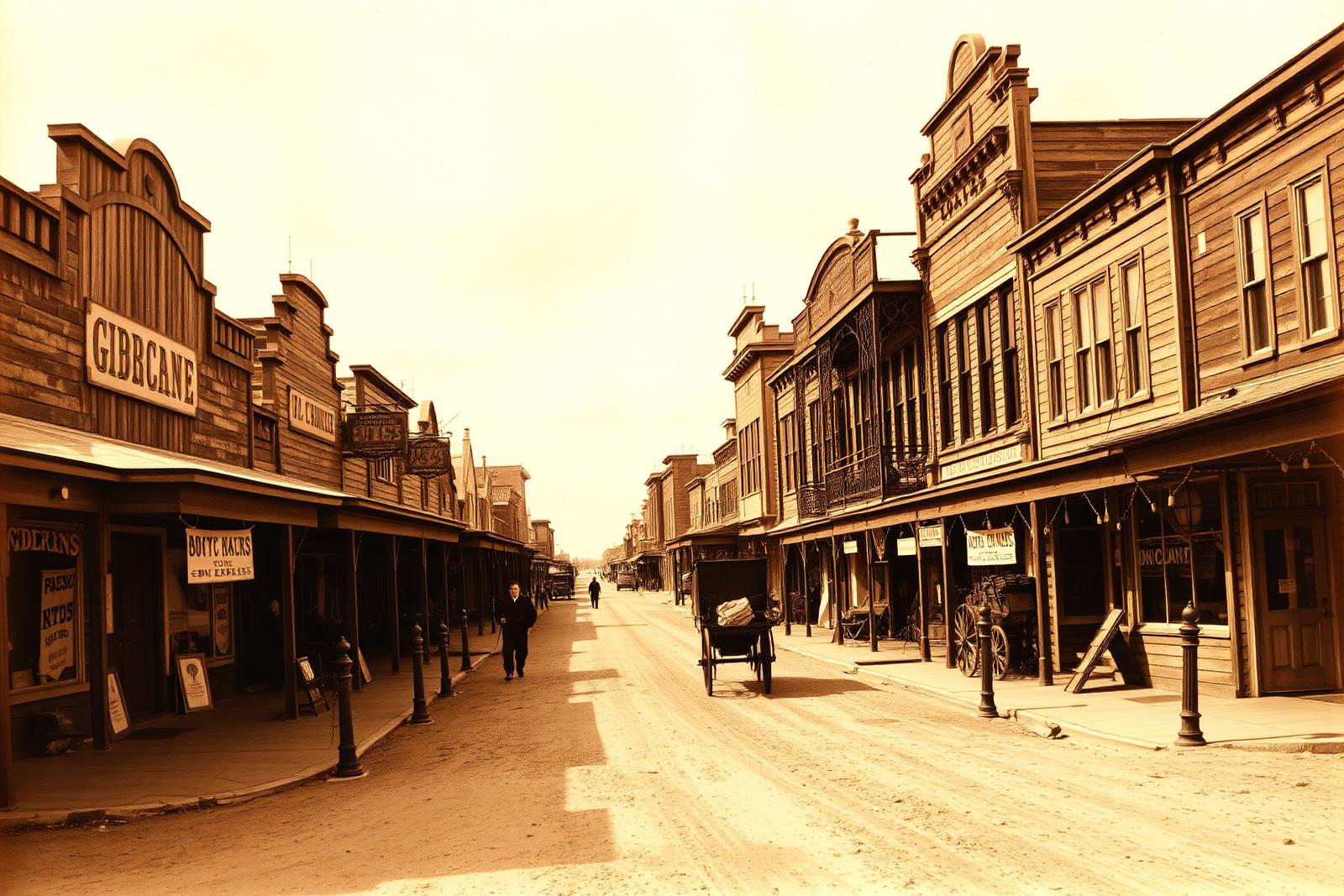
For more than 150 years, Ogallala has stood at the crossroads of cattle, rail, river, and reservoir. This is its story.
Ogallala is platted as a watering stop along the newly built Union Pacific Railroad. Named after the Oglala Sioux, the town begins as a cluster of section houses on the South Platte.
Texas longhorns are driven north along the Western (Texas) Trail to be loaded onto rail cars at Ogallala. Cowboys arrive after months on the trail — and the town earns its reputation as the 'Gomorrah of the Plains' for its saloons, gambling halls, and gunfights.
Cattle baron Louis Aufdengarten builds a brick mansion overlooking town as a wedding gift — though his bride never moved in. It still stands today as one of Ogallala's most beloved landmarks.
Ogallala is named the seat of Keith County, anchoring the region as agriculture and ranching transform the surrounding plains.
The completion of Kingsley Dam impounds the North Platte River, creating Lake McConaughy — Nebraska's largest reservoir and a permanent reshape of the region's identity.
Ogallala balances its frontier heritage with modern life — drawing visitors to Boot Hill, the lakefront, and the wide quiet of the Sandhills, while serving as the commercial heart of Keith County.
comes from the Oglala band of the Lakota Sioux, meaning 'to scatter one's own.'
earned its name because cowboys buried there often 'died with their boots on' — a turn of phrase from the trail-driving days.
is sometimes nicknamed 'Big Mac' — and at full pool holds enough water to cover the state of Connecticut three feet deep.